
Lead paint disclosure: what landlords and sellers must tell you
A lead paint disclosure means the written notice a landlord or seller owes you about known lead in most homes built before 1978. Along with it, you should receive a pamphlet, all available lead records, and a warning printed in your lease or sales contract. Why the rule? The US banned lead-based paint for homes in 1978, so paint on older walls may still contain it.
- housing the rule covers
- Before 1978
- for a buyer to test for lead
- 10 days
- that signed disclosures are kept
- 3 years
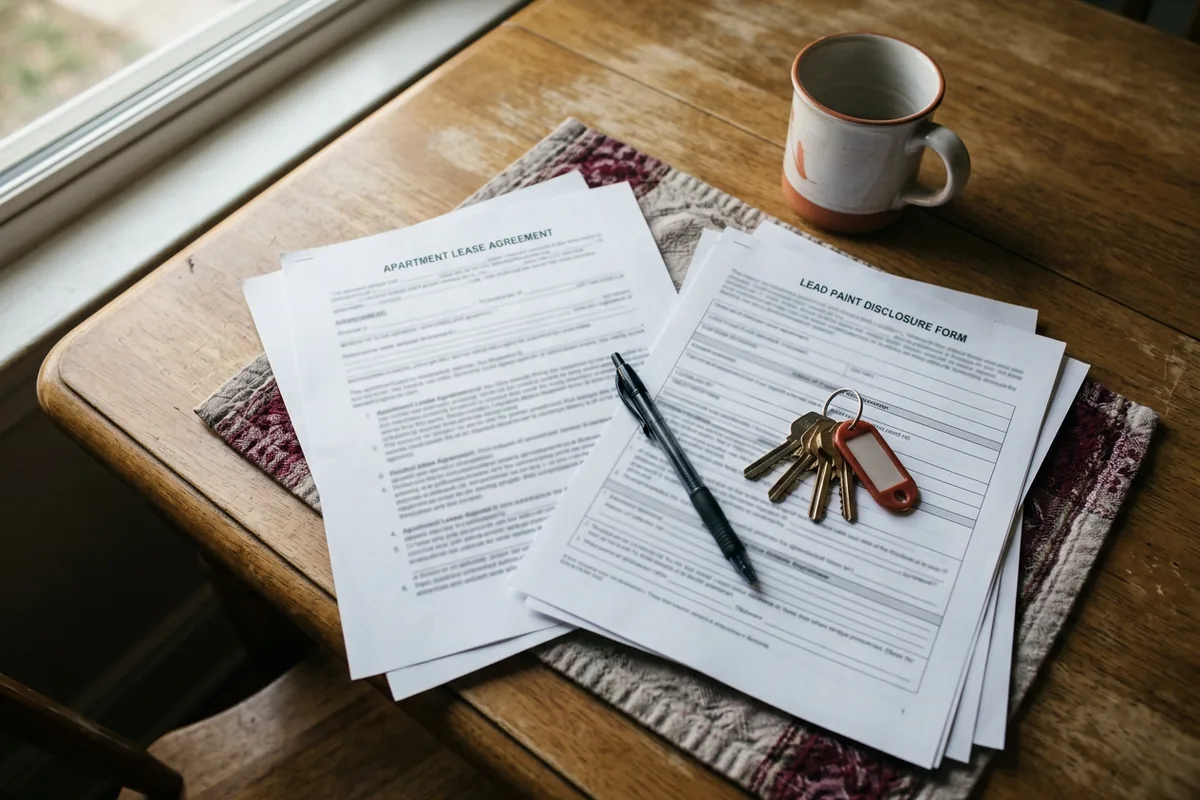
Lead based paint disclosure: who the rule covers
A single federal statute, Section 1018 of Title X, covers both renting and buying most homes built before 1978. Buyers get one extra protection: time to test for lead before the sale is final.
The main duty sits with whoever rents out or sells the home. Real estate agents share responsibility for seeing that the disclosure gets made, so an agent can't just push it off on the owner.
Owners must tell you only about lead they already know of. Nothing in the rule requires a landlord to inspect the paint. So when a disclosure says "no known lead," it means only that the owner knows of none. It says nothing about whether the paint was ever tested.
What should you receive?
A complete disclosure has several pieces. The federal rule says the landlord or seller must hand over:
- The EPA pamphlet "Protect Your Family From Lead In Your Home"
- Information about any known lead-based paint or lead hazards in the home
- All available lead records and reports
- A Lead Warning Statement inside the lease or contract
The Lead Warning Statement is fixed wording about lead that must appear in the lease or contract document itself. It's not a separate note you get afterwards.
After everyone signs, the signed disclosure must be kept for 3 years. Keeping a copy for yourself is a good idea too, so you can prove what you were told and when.
Homes where no disclosure is required
The federal rule doesn't reach every home or every deal. These are exempt:
- Homes built in 1978 or later
- Leases running 100 days or less
- Homes sold in foreclosure
- Units with no bedrooms, unless a child under 6 resides there or is expected to
That last one matters if a young child is part of your household. Normally a zero-bedroom unit needs no disclosure. But once a child under 6 is living there or expected to move in, it does.
The buyer's 10 days to test for lead
Buyers have 10 days to get the home checked for lead. You can spend that time on a lead inspection or on a risk assessment.
The buyer and seller may agree in writing to lengthen or shorten the 10 days. Any change has to be in writing to count.
You can also waive the inspection chance. To waive it means you decide to skip the check and move ahead anyway. The choice is yours, so weigh the home's age and who will live in it before you say yes.
Extra rules for New York City rentals
NYC landlords have local forms to deal with on top of the federal rule. At lease signing, the owner must give you the pamphlet along with the Lease/Commencement of Occupancy Notice. That same notice comes due again at each renewal, not just at the start.
New tenants must also get a copy of "Lead Paint Hazards in the Home", the city's own pamphlet. Renting in an older NYC building? Expect both the city's forms and the federal disclosure.
| What you should receive | When | Where the rule comes from |
|---|---|---|
| EPA pamphlet "Protect Your Family From Lead In Your Home" | With the disclosure | Federal |
| Known lead details and all available records | With the disclosure | Federal |
| Lead Warning Statement inside the lease or contract | Inside the signed paperwork | Federal |
| Lease/Commencement of Occupancy Notice | At signing and again at every renewal | New York City |
| City pamphlet "Lead Paint Hazards in the Home" | When you start as a new tenant | New York City |
How to report a missing disclosure
The EPA lays out the disclosure rule and takes reports when it's broken. Didn't get the disclosure from your landlord, seller, agent, or property manager? You can report a missing disclosure to the EPA.
Those who break the rule may face penalties. That includes sellers, landlords, agents and property managers. The EPA doesn't post dollar amounts on its disclosure page.
Before filing a report, pull together whatever you do have. That might be your lease or contract, any pamphlets handed to you, and your signing dates. They show which parts of the disclosure never reached you.