
Blood lead levels: what your child's result means
If your child's blood lead level is 3.5 or higher, the CDC says it needs follow-up. Your child's report will most likely show the number in µg/dL, short for micrograms per deciliter, a measure of how much lead is present in a small amount of blood. The amounts involved are tiny.
In short: 3.5 µg/dL is the number where the CDC recommends follow-up. If a finger-prick test is 3.5 or higher, a second test using blood drawn straight from a vein confirms it, and the bigger that first reading is, the faster the confirm should happen.
- CDC blood lead reference value
- 3.5 µg/dL
- of US children aged 1 to 5 are below it
- 97.5%
- safe level of lead in children found
- None
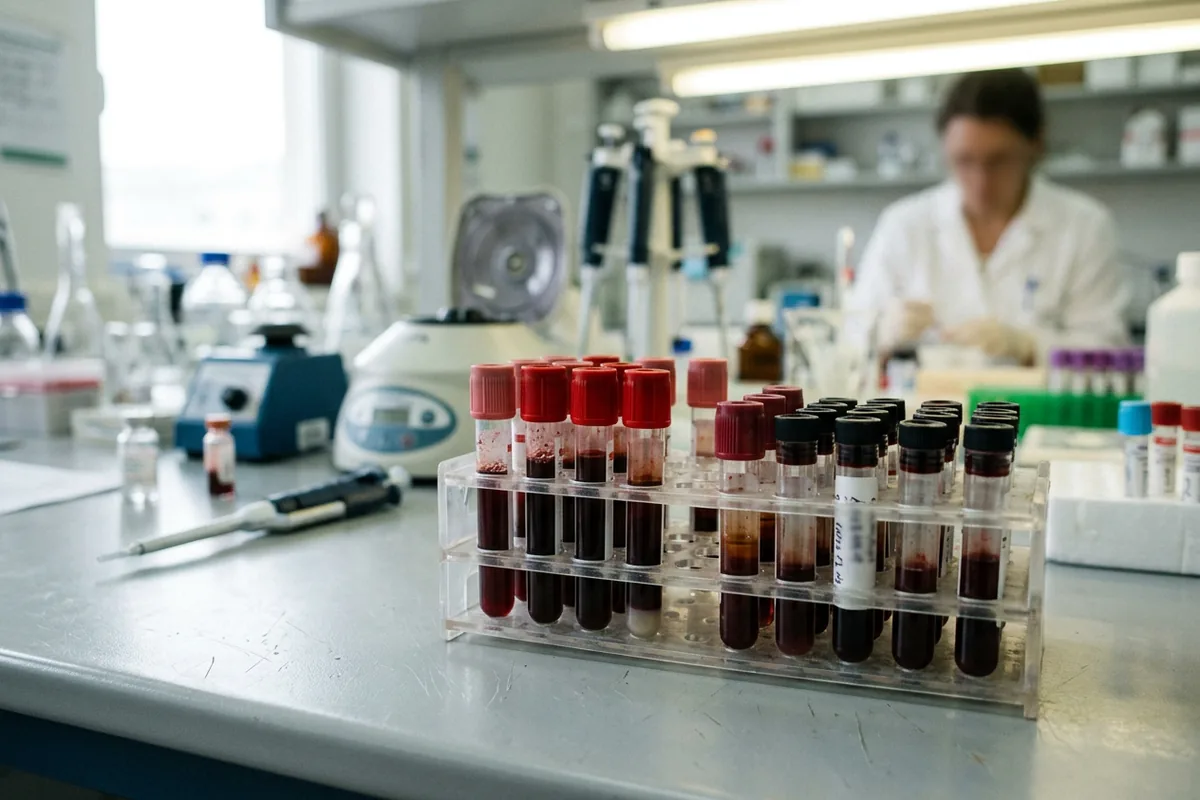
What counts as an elevated blood lead level?
This cut-off from the CDC is called the blood lead reference value, and it sits at 3.5 µg/dL. A child at that level or higher carries more lead in their blood than most kids their age.
Where does the number come from? A national survey looked at US children ages 1 to 5 between 2015 and 2018. Of those children, about 97.5% came in under 3.5, which puts any child at or above the cut-off in the top 2.5%. Roughly 500,000 US children fall at or above that number.
What does a lead level of 5 mean?
A 5 is above the CDC's 3.5 cut-off, so your child's doctor will want to check in again. Per the EPA, the CDC advises public health action starting at 3.5 or more.
One thing is worth knowing. Under 5 µg/dL, a HUD environmental investigation might not occur. That investigation means someone inspects the home to track down where the lead came from. Whatever the result, ask your child's doctor what follow-up is needed and how the source of lead will be found.
Finger-prick tests and the follow-up vein test
The first test many children get is a capillary sample, taken from a prick on a finger or heel. Lead sitting on the skin can end up in that sample, so these tests sometimes come back higher than the real level.
So any finger-prick reading of 3.5 or above needs confirming with a venous sample, meaning blood drawn straight from a vein. The bigger that first reading is, the faster the CDC wants the confirm done.
| Finger-prick reading (µg/dL) | When the vein check is due |
|---|---|
| 3.5 to 9 | Inside 3 months |
| 10 to 19 | Inside 1 month |
| 20 to 44 | Inside 2 weeks |
Say the prick test reads 7. The vein test is then due within 3 months. If it reads 20, that window tightens to just 2 weeks.
What do doctors do about children's lead levels?
CDC advice for doctors matches each action to the confirmed vein result. Higher levels call for more steps.
| Confirmed vein reading (µg/dL) | What the CDC suggests |
|---|---|
| 3.5 to 19 | Tell the state or local health department, walk the family through lead exposure, ask where lead might be coming from, and set up a search for the source |
| 20 to 44 | Gather a full history, examine the child, check the home, and think about a belly X-ray |
| 45 or more | Top tier: a check of the nerves and brain, an X-ray, and maybe a hospital stay |
For results between 3.5 and 19, reporting lets the health department know what is going on. The questions about exposure are there to help track down the lead's source.
When do lead levels call for hospital care?
A child with symptoms at 45 µg/dL or higher needs to go into the hospital. Symptoms can include confusion, weakness, seizures, coma, throwing up, and pain in the belly. If you're worried, you can call Poison Control for advice on what to do.
When levels get very high, doctors may turn to chelation, a medicine that pulls lead out of the body.
When are children tested?
In New York State, providers are required to test every child for lead at ages 1 and 2. Kids should also be checked each year for possible lead exposure until they turn 6.
Kids with Medicaid coverage need a lead test at 12 months old and again at 24 months old. Any Medicaid child between 24 and 72 months old with no test on record needs testing too.
Lead checks while pregnant
In New York City, anyone expecting a baby should be checked for lead exposure at the first prenatal visit.