
Lead paint test: kits, inspections and NYC rules
In New York City you can test for lead paint one of two ways: buy a home kit and swab the paint yourself, or bring in a certified inspector who uses an XRF machine to read every painted surface. Kits are quick and cheap, but the city trusts only a certified inspector's result, and NYC's cutoff for what counts as lead paint is stricter than the federal cutoff.
- - NYC's limit for lead paint: 0.5 mg/cm2, reduced from 1.0, effective December 1, 2021
- - Federal rules define lead-based paint using either of two measurements: 1.0 milligram of lead per square centimeter, or 0.5% lead by weight.
- - Kits the EPA recognizes: three (LeadCheck, D-Lead and the Massachusetts kit), but only when a certified inspector, risk assessor or renovator does the test.
- - Deadline for owners in NYC: August 2025, covering every painted surface in pre-1960 buildings
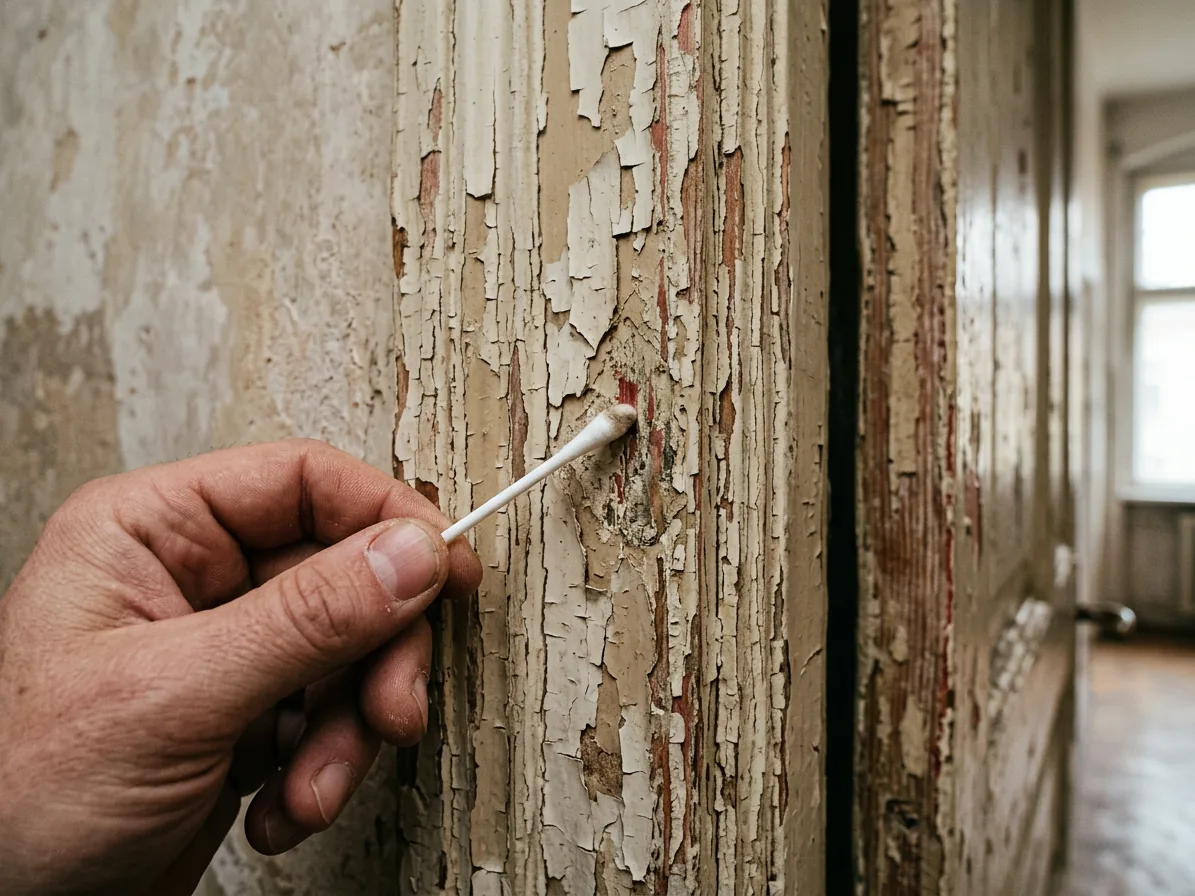
Can you trust an EPA lead paint test kit?
With a kit, you rub a swab or a liquid over the paint and wait to see if it changes color. The EPA (the federal Environmental Protection Agency) recognizes three kits through its renovation rule, which dates to April 22, 2008:
- LeadCheck, the swab kit most people run into. 3M quit producing it in October 2023, and by September 2024 the brand belonged to Luxfer Magtech.
- D-Lead, which EPA approved on August 31, 2010, but only for negative responses. In plain terms, EPA trusts it when it reports no lead, but not when it reports lead.
- The State of Massachusetts kit, which the EPA recognizes only on drywall and plaster. Wood, metal, and window frames are off limits.
All three share one big limitation. The EPA wanted kits to hit two accuracy marks, and no kit has hit both. One of those marks is that a kit should miss lead that's really there no more than 5% of the time. No kit has met both marks, so even a recognized kit can get it wrong.
So think of a kit result as a clue, not an answer. One more thing worth knowing: EPA only recognizes a kit result if a certified inspector, a risk assessor, or a certified renovator did the test. A swab you run yourself won't win an argument with a landlord or the city.
Under federal rules, paint counts as lead-based at 1.0 mg/cm2, or 1 milligram of lead for every square centimeter that's painted. New York City draws the line lower, so a surface that passes federally can still be lead paint in the city.
| Place | Lead level that counts |
|---|---|
| Federal (EPA) | 1.0 mg/cm2 or 0.5% by weight |
| NYC | 0.5 mg/cm2 (since December 1, 2021) |
What a professional lead paint inspection looks like
The inspector moves room by room and reads each painted surface with the XRF analyzer, without scraping paint off. You get a written report listing every surface and its reading.
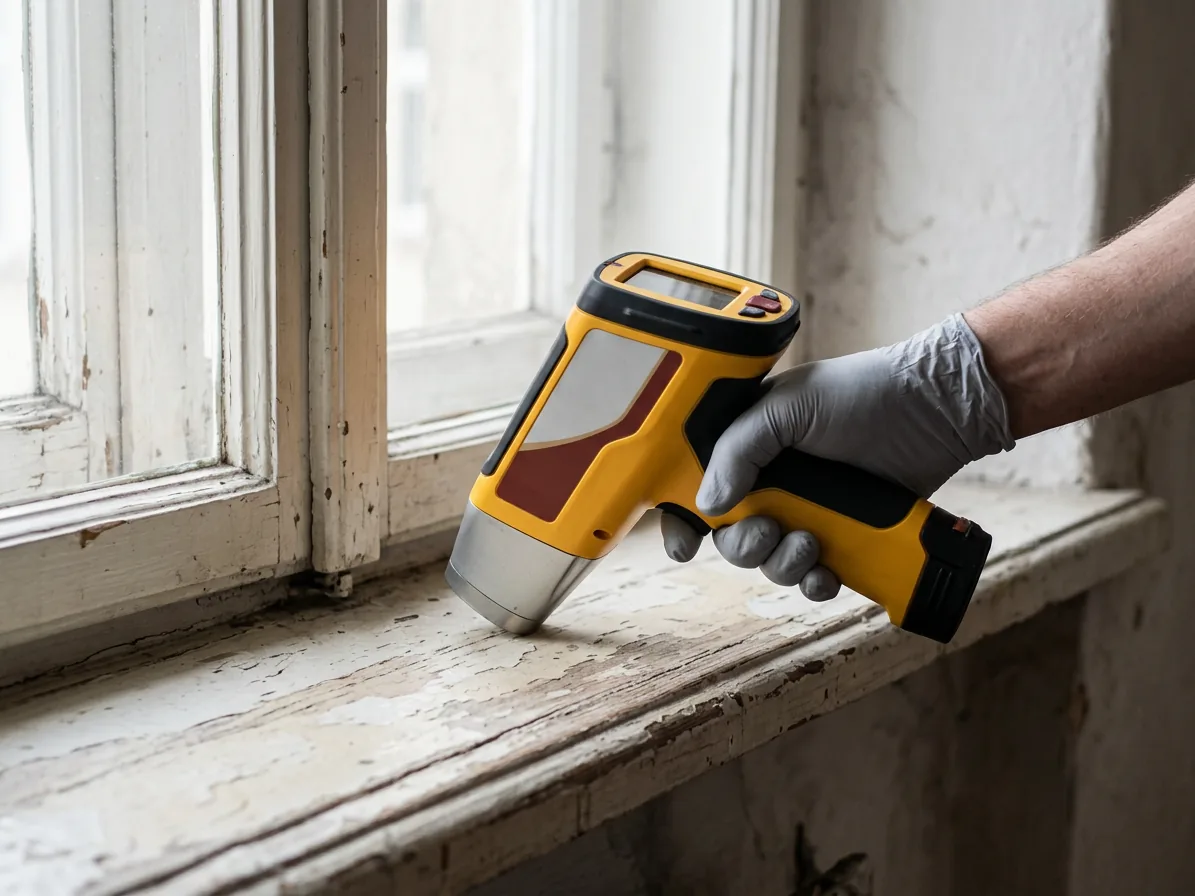
How a lead paint inspection works
An inspection means a certified inspector or risk assessor visits the home and measures the actual paint instead of guessing from how old the building is. If you want to know whether a home has lead paint, EPA suggests bringing in a certified inspector or risk assessor for lead-based paint, and the CDC says the same.
There are two professional ways to test. The inspector can cut out a tiny chip of paint and mail it to a lab in the national lead laboratory program. Or they can use XRF testing, where a handheld device reads the lead right through the paint, no scraping needed.
Building age shapes the odds. About three-quarters of pre-1978 US homes still contain some lead-based paint. That's why older buildings get tested one surface at a time instead of being waved through as safe.
Lead inspections in the five boroughs
Housing inspections in the city fall mainly to the Department of Housing Preservation and Development, or HPD for short, the municipal body that polices housing standards in rental buildings. Whenever an HPD inspector comes across peeling paint, out comes the XRF machine, and the reading goes into the record.
If the first inspector spots peeling paint but doesn't have the machine on hand, a follow-up visit within two weeks may be scheduled to test it. So a visit that ends without a number isn't the end of the story.
The city begins from a strict starting point. In a covered building, paint is presumed to be lead-based until an EPA-certified lead inspector tests it negative and HPD grants an exemption. That's why a home kit can't clear the presumption. Only a certified inspector's test can.
Under city rules, peeling paint stops counting as a lead hazard only if the surface was tested and shows lead under 0.5 mg/cm2. If your landlord says the paint is safe, it's fair to ask for a certified inspector's report showing each surface below that number. You can also look up your building on our home page to see any lead paint violations HPD has on record, and get free repair and inspection request letters on our tenant rights NYC page.
NYC's lead paint inspection requirements
Owners of pre-1960 buildings were required to run a one-time lead test on all painted surfaces by August 2025, both inside apartments and in shared spaces like hallways and stairwells. An EPA-certified lead inspector has to perform the test before the city will accept the results.
The bar those tests are measured against moved on December 1, 2021, when the city tightened its cutoff from 1.0 down to 0.5 mg/cm2. A result falling in the 0.5-to-1.0 range cleared the old standard yet counts as lead paint today, so a test from before that date might not settle things anymore.
Federal rules add a requirement around repair work. Any firm that renovates, repairs, or paints a pre-1978 home with young children living in it has to be lead-safe certified. If a renovator decides the work won't touch lead paint, they have to keep the records supporting that decision for 3 years.
XRF machines in NYC
The initials stand for x-ray fluorescence. The handheld device sends an x-ray through the paint and reports how much lead is inside, straight through every layer, with no cutting or scraping. HPD inspectors rely on it when they find peeling paint, and it's one of a pair of professional methods EPA lists, next to a lab-tested paint chip sample.
For every spot the machine reads, it prints a number, and the city compares that figure to 0.5 mg/cm2. At or above that level, the surface is lead-based paint under city rules. Below it, with an EPA-certified inspector doing the test, an owner can use that result to demonstrate that peeling paint poses no lead hazard, or to request an exemption from HPD.
For a tenant or owner, two parts of the report matter most: who did the testing, and what each surface read. The city looks for a report from a certified inspector that covers all the walls, doors, and window frames. A swab that changed color, or a report naming only the building and not the surfaces, won't carry the same weight.